







When translating personal documents, administrative records, and business documents, proper names require special attention. Even a minor spelling error can cause inconsistencies across documents. This may create difficulties when applying for visas, studying abroad, working overseas, or completing other international procedures.
What are the most common mistakes when translating Vietnamese names into English? How can translators avoid errors and ensure consistency? Let’s explore these issues with Dịch thuật Châu Á.
1. Changing the Order of Surnames, Middle Names, and Given Names
One common mistake is changing the order of Vietnamese names based on English naming conventions. Vietnamese names typically follow the order of surname, middle name, and given name. Meanwhile, English forms often separate these elements into fields such as Surname, Given Name, and Middle Name.
For example, the Vietnamese name “Nguyễn Văn An” is commonly written as “Nguyen Van An.” However, when completing international forms, applicants must identify which fields require their surname, middle name, or given name. They should not rearrange the name simply because they assume English names must place the given name first.
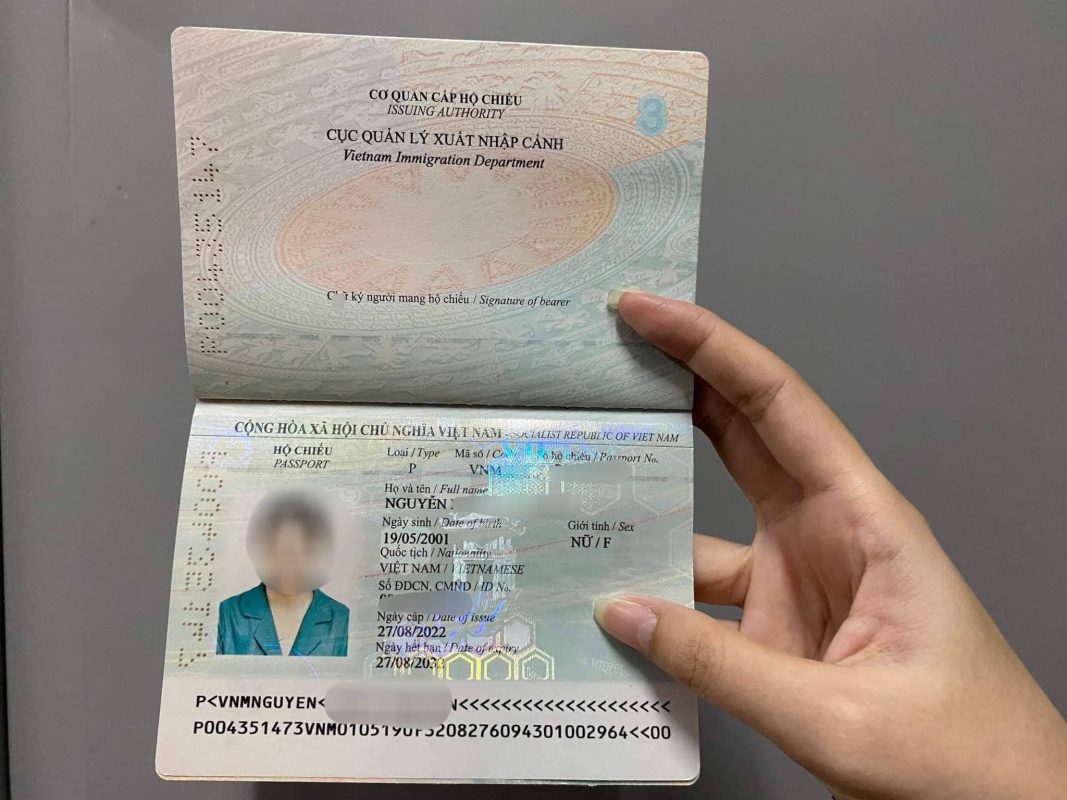
For visa applications, study-abroad documents, and immigration paperwork, checking the passport and the receiving authority’s instructions is particularly important. The name format in the translation should match the document’s purpose and the receiving institution’s requirements.

2. Using Inconsistent Name Spellings Across Documents
An individual may have several documents, including an identity card, birth certificate, diploma, academic transcript, marriage certificate, and passport. If the English spellings of their name differ across these documents, the receiving authority may request clarification or additional evidence to verify their identity.
For example, the Vietnamese name “Trần Thị Minh Anh” may appear as “Tran Thi Minh Anh” in one document but “Tran Minh Anh” in another. Although omitting a middle name does not automatically invalidate a document, it may raise questions about identity consistency.
To prevent this problem, translators should check the passport or other relevant official identification documents before finalizing the translation. When clients provide multiple documents, translators should review the entire set for consistency rather than translating each document independently.
3. Adding Vietnamese Diacritics or Changing Name Spellings Incorrectly
Vietnamese uses tone marks and diacritical marks, while many English forms and international electronic systems require names without these marks. Therefore, Vietnamese names are often written using Latin letters without diacritics in English-language documents.
For example, the name “Đặng Thị Hồng” is commonly written as “Dang Thi Hong” when a diacritic-free format is required. However, translators should not arbitrarily alter names, add or remove letters, or change spellings based on personal preference.
It is important to note that passports may present names according to specific transliteration rules and formatting conventions. Translators should prioritize official identification documents and follow the receiving authority’s instructions. They should not assume that every foreign institution applies identical rules to Vietnamese names.
4. Confusing Name Translation with Name Preservation
Not every proper name needs to be translated into English. For personal names, geographical names, and officially established organization names, translators generally need to preserve the appropriate spelling rather than translate each element literally.
For example, the surname “Nguyễn” should not be replaced with an English word that has a similar meaning. Likewise, “Minh Anh” should not be converted into an English phrase simply to make the name sound more natural. Translating a name’s meaning without justification may cause the translated document to differ from the person’s official identity information.
Similarly, the names of government agencies, schools, and businesses should use their official English names when available. If an established English name cannot be verified, translators should consult reliable sources instead of inventing a new one.

5. Ignoring the Requirements of Different Document Types
Different documents may have different requirements for presenting names. Visa applications, study-abroad documents, employment records, and business documents do not always follow identical naming conventions.
For example, a visa application may require applicants to enter their names exactly as shown in their passports. Meanwhile, a diploma translation must accurately reflect the name printed on the original certificate. If translators apply one general rule without considering the document’s purpose, the translation may fail to meet the actual submission requirements.
Before translating, it is important to identify the document type, target language, receiving authority, and any notarization or certification requirements. For important documents, clients should provide the receiving authority’s instructions whenever possible. This helps translation providers verify the appropriate name format.
How Can You Avoid Name Translation Errors?
Accurate name translation requires careful information verification and consistency checks. Translators should follow these practical steps:
-
Check the original documents: Verify the name, the order of its elements, and the spelling shown in official records.
-
Maintain consistency across documents: Use an appropriate and consistent spelling throughout related documents.
-
Avoid unauthorized changes: Do not translate names by meaning, add or remove name elements, or substitute English names without a valid basis.
-
Check the receiving authority’s requirements: Confirm the naming rules for passports, application forms, and specialized documents.
-
Review the translation before delivery: Recheck names, dates, and other important identification details.
These checks are particularly important for document packages containing multiple records. Errors may occur not only within individual documents but also between translations submitted as part of the same application.
Accurate Name Translation with Dịch thuật Châu Á
Although a proper name may occupy only a small part of a document, it plays an important role in identity verification and information consistency. A high-quality translation must be linguistically accurate, faithfully reflect the original document, and meet the client’s intended purpose.
Dịch thuật Châu Á provides translation services for various documents, including personal records, administrative documents, study-abroad applications, employment records, and business documents. We support English and many other languages. Our workflow emphasizes information verification to help reduce spelling errors, name discrepancies, and inconsistencies across documents.
If you need translations for submission to government authorities, educational institutions, or overseas business partners, please prepare the complete original documents and explain their intended use. Our translation team can help check the presentation of proper names and advise on relevant notarization or certification requirements within the scope of our services.
Bài viết liên quan