









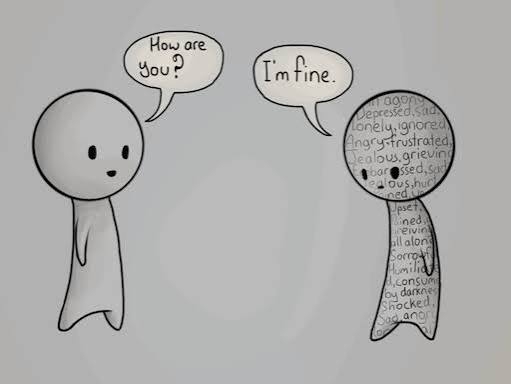
Have you ever asked someone, “How are you?” and received the answer, “I’m fine”? It sounds simple enough. However, in English-speaking cultures, this familiar expression does not always mean someone is genuinely feeling fine. Sometimes, people use it to hide their emotions, avoid uncomfortable conversations, or simply maintain polite communication.
Understanding this expression reveals something interesting about English: language is not always about what people say, but also about what they mean.
“I’m Fine” Doesn’t Always Mean “I’m Happy”
In English, “I’m fine” is one of the most common responses to “How are you?” However, its meaning depends heavily on context, tone, and the relationship between speakers.
Someone might say “I’m fine” because they genuinely feel good. Another person might use the same words while feeling exhausted, disappointed, or emotionally overwhelmed.
For example:
- “I’m fine, thanks!” – A friendly and positive response.
- “I’m fine.” – A neutral response that may suggest the person does not want to elaborate.
- “I’m fine.” – Said quietly or with a sigh, it might indicate something is wrong.
The words remain identical, but the emotional meaning can change completely.
Five English Expressions That Don’t Always Mean What They Say
English speakers often use expressions that communicate more than their literal meanings.
1. “I’m fine.”
Sometimes, this means everything is genuinely okay. Other times, it means, “I don’t really want to talk about it.”
2. “It’s okay.”
This expression can mean something is acceptable. However, depending on the situation, it might also mean, “I’m disappointed, but I won’t argue.”
3. “No worries.”
Usually, this reassures someone that a problem is not serious. It can also politely dismiss an apology or indicate that something is not worth worrying about.
4. “Whatever.”
This word can express indifference, frustration, or a lack of interest. Its meaning depends greatly on tone and context.
5. “I’m good.”
When someone offers food, drinks, or assistance, “I’m good” usually means they do not need anything. It does not necessarily mean they are feeling emotionally good.
These expressions demonstrate why understanding English requires more than memorizing vocabulary.
Why Do People Hide Their Feelings Behind Simple Words?
Communication is influenced by culture, personality, and social expectations.
In many English-speaking situations, people use polite expressions to maintain comfortable interactions. They may not want to share personal problems with acquaintances or strangers.
For example, “How are you?” often functions as a greeting rather than a serious question about someone’s emotional condition.
A simple “Good, thanks. How about you?” is usually enough.
However, when speaking with close friends, the same question may invite a more honest conversation.

This distinction is important because interpreting every greeting literally can create awkward situations.
How Can You Tell What Someone Really Means?
Understanding emotional expressions requires paying attention to several factors.
Tone of voice: A cheerful tone may suggest genuine happiness, while a quiet or hesitant response may indicate discomfort.
Facial expressions: Smiles, eye contact, and other facial expressions can provide additional context.
Conversation context: Someone who just experienced a difficult situation may use “I’m fine” differently from someone enjoying a relaxing afternoon.
Relationship between speakers: Close friends may understand subtle emotional signals that strangers would miss.
However, these signals are not definitive. The best way to understand someone’s feelings is to ask respectfully rather than assume.

English Expressions That Sound Comforting
English also has many expressions that communicate emotional support without requiring lengthy conversations.
- Take your time. – There’s no need to rush.
- I’m here for you. – You can count on my support.
- It’s okay to feel that way. – Your feelings are understandable.
- One day at a time. – Focus on today instead of worrying about everything.
- You don’t have to explain. – You can share only what you’re comfortable sharing.
- Let it be. – Sometimes, accepting things is better than trying to control everything.
These expressions are simple, but they can communicate warmth, patience, and understanding.
Language Is More Than Words
Learning English is not just about grammar, vocabulary, or pronunciation. It also involves understanding how people communicate emotions, intentions, and social relationships.
A sentence can be grammatically correct yet emotionally inappropriate. Similarly, a simple expression can carry a much deeper meaning than its literal translation suggests.
This is why context matters so much in both communication and translation.
Conclusion
The next time someone says “I’m fine,” remember that the expression may have several meanings. It could indicate genuine happiness, polite communication, or a desire for privacy.
Rather than assuming, sometimes the most thoughtful response is simply:
“I’m glad to hear that. But if you ever want to talk, I’m here.”
At Dịch thuật Châu Á, we believe understanding language means understanding more than words. Context, culture, and emotional nuances are essential to communicating accurately and naturally across languages.
DỊCH THUẬT CHÂU Á – Sự thành công là phép cộng của thành tâm thiện ý.
Website: https://dichthuatchaua.com
Bài viết liên quan