








Tax filing and tax settlement documents contain important information about a company’s financial and tax activities. When these documents are used for foreign partners, investors, banks, authorities, or international organizations, accurate translation may be required.
When Do Tax Filing and Tax Settlement Documents Need Translation?
Businesses may need to translate tax documents in the following situations:
-
Working with foreign investors or business partners.
-
Providing financial information to foreign organizations.
-
Preparing investment or business expansion documents.
-
Applying for loans from foreign banks or financial institutions.
-
Participating in international tenders or contracts.
-
Preparing visa or work permit documents for foreigners.
-
Submitting documents to foreign authorities or organizations.
-
Completing procedures involving foreign businesses or investors.
Depending on the purpose of use, the translated documents may also need certification or notarization.
Which Documents Are Included in Tax Filing and Tax Settlement Records?
Tax-related documents may include various types of financial and administrative records.
Tax Returns
Tax returns provide information about the taxes declared by a business during a specific tax period.
Depending on the business, these may include VAT returns, corporate income tax declarations, and other relevant tax forms.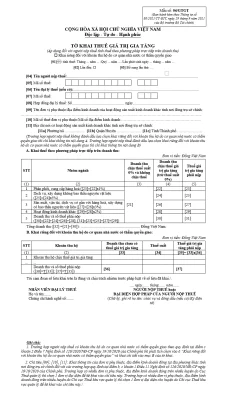
Financial Statements
Financial statements are often used together with tax settlement documents to demonstrate a company’s financial position and business performance.
Common financial statements include:
-
Balance sheets.
-
Income statements.
-
Cash flow statements.
-
Notes to financial statements.
-
Other relevant accounting reports.
Tax Settlement Documents
Tax settlement records provide information about the taxes calculated and settled by a business for a specific period.
These documents may be required when businesses work with foreign organizations or complete administrative and financial procedures.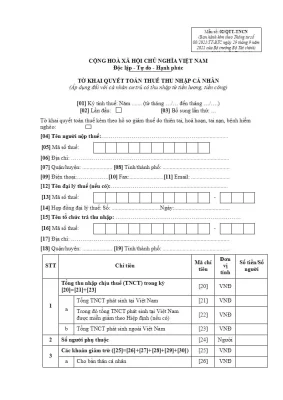
Payment Documents to the State Budget
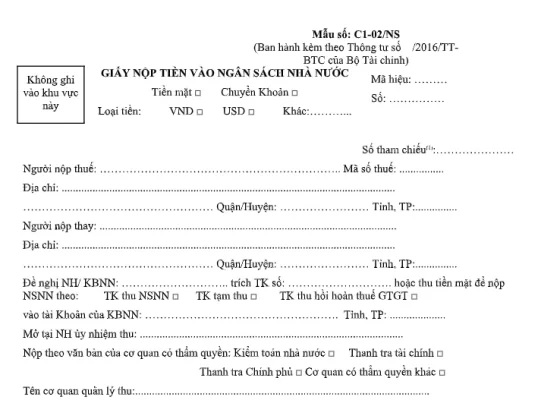
Payment receipts and other documents proving tax payments may also need translation.
The translated information should accurately reflect payment dates, tax amounts, tax types, and relevant taxpayer information.
Tax Authority Notices and Documents
Businesses may receive various notices, decisions, or official documents from tax authorities.
These documents may need to be translated when they are submitted to foreign organizations, investors, banks, or authorities.
Which Language Should Tax Documents Be Translated Into?
English is one of the most commonly requested languages for tax and financial document translation.
However, depending on the receiving organization, businesses may also need translations into Chinese, Korean, Japanese, French, German, or other languages.
Before starting the translation, businesses should confirm the language requirements of the organization receiving the documents.
Do Tax Filing and Tax Settlement Translations Need Notarization?
Not every tax document requires notarized translation.
The requirement depends on the purpose of use and the requirements of the receiving organization.
Documents submitted to government authorities, banks, investment organizations, foreign institutions, or other official bodies may require certification or notarization.
Therefore, businesses should confirm the requirements before requesting translation.
Tax Filing and Tax Settlement Document Translation Process
A typical translation process includes the following steps:
Step 1: Receive and check the documents
The translation provider reviews the documents, format, number of pages, language, and content.
Step 2: Confirm the translation requirements
The required language, purpose of use, format, and certification or notarization requirements are confirmed.
Step 3: Translate the documents
Professional translators translate the documents while maintaining accurate tax, accounting, and financial terminology.
Step 4: Review the translated content
Important information such as tax identification numbers, company names, tax periods, revenue, expenses, and tax amounts is carefully checked.
Step 5: Certify or notarize the translation if required
If certification or notarization is required, the translated documents are processed according to the applicable requirements.
Step 6: Deliver the completed translation
The final documents are delivered in the required format.
What Should You Consider When Translating Tax Documents?
Tax and financial documents contain many figures and specialized terms. Therefore, accuracy is especially important.
Businesses should pay attention to:
-
Tax identification numbers.
-
Company names.
-
Tax periods.
-
Revenue and expenses.
-
Tax amounts.
-
Paid tax amounts.
-
Accounting and tax terminology.
-
Consistency between different documents.
Businesses should also provide complete documents whenever possible. This helps translators understand the context and maintain consistency throughout the translation.
Where Can You Translate Tax Filing and Tax Settlement Documents?
Businesses should choose a professional translation provider with experience in tax, accounting, financial, and corporate documents.
Asian Translation and Interpretation Company provides translation services for tax documents, financial statements, accounting records, and other business documents in multiple languages.
Depending on the purpose of use, the company can also support document certification or notarized translation procedures.
Frequently Asked Questions
Do tax reports always need notarized translation?
No. Not all tax reports require notarized translation. The requirement depends on the purpose of use and the receiving organization.
Can tax settlement documents be translated into English?
Yes. English is commonly used for international business and financial procedures. However, the required language should be confirmed in advance.
Can financial statements be translated together with tax settlement documents?
Yes. Financial statements are often translated together with tax settlement documents when they are used to demonstrate a company’s financial position or business activities.
Can scanned tax documents be translated?
Clear scanned copies can generally be used as the basis for translation. However, some procedures may require original documents or certified copies.
Conclusion
Tax filing and tax settlement document translation is commonly required when businesses work with foreign investors, partners, banks, authorities, and international organizations.
Documents such as tax returns, financial statements, tax settlement records, payment receipts, and tax authority notices may need translation depending on their purpose.
Accurate translation helps ensure that tax figures, accounting terminology, company information, and other important details remain consistent and clear throughout the documents.
Bài viết liên quan