









Private notarization is a common term used to refer to notarization services provided by Notary Offices established and operated by notaries under Vietnamese law. It is one of the common forms of notarial practice in Vietnam.
Many people still believe that private notarization and state notarization are completely different forms. However, it is important to understand that the legal validity of a notarized document does not depend on whether the notary office belongs to the private or state sector.
What Is Private Notarization?
Private notarization generally refers to notarization performed at a Notary Office. A Notary Office is an organization that provides notarial services and operates in accordance with the law.
At a Notary Office, notaries check documents, verify the legality of contracts and transactions, and perform other notarial activities within their authority.
Therefore, when people say “private notarization,” they usually mean visiting a Notary Office instead of completing the procedure at a Public Notary Office.
Does Private Notarization Have Legal Validity?
Yes. A notarized document prepared and notarized by a competent notary in accordance with the required procedures has legal validity under the law.
This means that people should not assume that documents notarized at a private Notary Office have lower legal value than documents notarized at a Public Notary Office.
The important factors are choosing the appropriate notarial organization and completing the procedure in accordance with legal requirements.
How Is Private Notarization Different from State Notarization?
In common usage, people often use the terms “private notarization” and “state notarization” to distinguish where the procedure is performed.
The difference can be understood simply as follows:
-
A Public Notary Office is a public non-business unit established according to regulations.
-
A Notary Office is an organization providing notarial services and operating in accordance with the law.
-
Both have notaries who perform notarial activities within their legal authority.
-
A legally notarized document has legal validity under the law. It does not have lower validity simply because it was notarized at a Notary Office.
Therefore, when choosing where to notarize documents, people should consider the appropriate authority, procedures, required documents, and requirements of the receiving authority.
What Procedures Can Be Performed at a Private Notary Office?
Depending on the type of document and specific requirements, a Notary Office can perform various notarial activities.
Common procedures include:
-
Notarization of sale and transfer contracts.
-
Notarization of property donation contracts.
-
Notarization of agreements on the division of an estate.
-
Notarization of documents declaring inheritance.
-
Notarization of authorization contracts.
-
Notarization of powers of attorney in cases permitted by law.
-
Notarization of other contracts and transactions as prescribed by law.
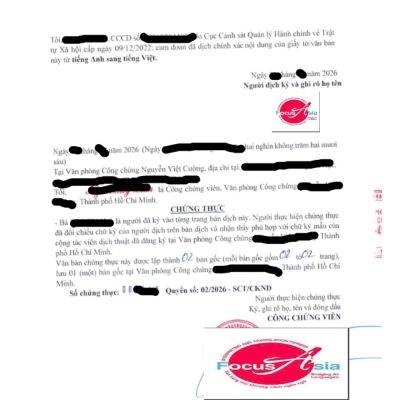
In addition, people may have copies certified against the originals or complete other related procedures, depending on the authority of each competent agency and the type of document.
What Documents Are Required for Private Notarization?
The required documents depend on the specific contract, transaction, or document requiring notarization.
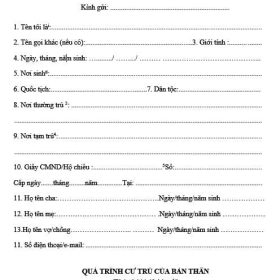
In general, the person requesting notarization should prepare:
-
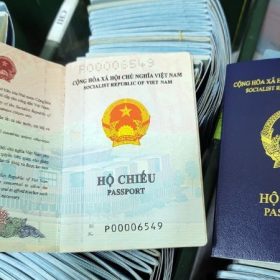
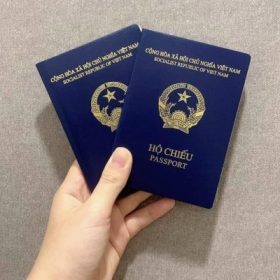
Citizen ID cards or other valid identification documents.
-
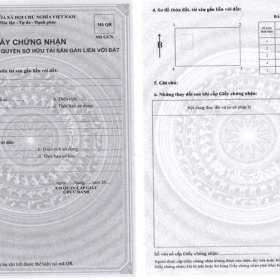
Documents proving ownership or land use rights
Bài viết liên quan