








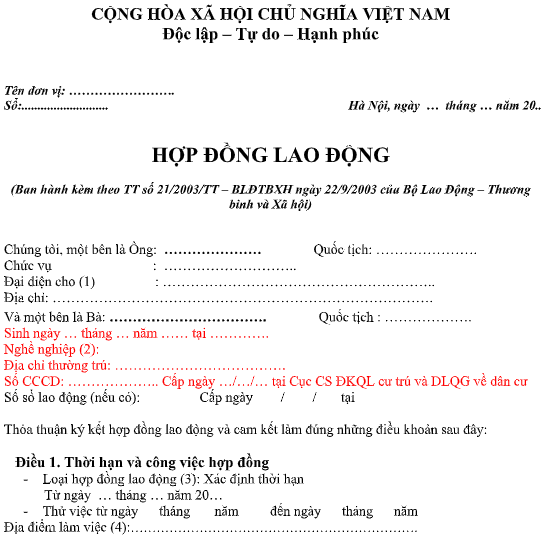
When working with foreign companies, recruiting international employees, or preparing administrative documents, employment contracts are important documents that require accurate translation. When a Vietnamese employment contract must be used abroad, or a foreign-language contract must be submitted to an organization in Vietnam, employment contract translation becomes necessary. An accurate translation helps all parties understand the agreement and verify details about job positions, salaries, contract periods, and employee rights.
When Is Employment Contract Translation Necessary?
Using Employment Contracts for Overseas Applications
Some overseas procedures may require employment contracts to verify work experience, job positions, or income. In these cases, Vietnamese employment contracts may need translation into English or another language specified by the receiving organization.
Depending on the intended purpose, applicants may need to translate the entire contract, contract appendices, or related documents. Checking the requirements beforehand helps prevent missing documents and additional submissions.
Preparing Documents for Foreign Employees
Companies employing foreign workers may need translated employment contracts and related personnel documents for human resource management or administrative procedures. Similarly, foreign employees working in Vietnam may need their foreign-language contracts translated into Vietnamese for submission to specific organizations.
In these situations, translations must accurately reflect employee information, employer details, job titles, and relevant contractual terms. Professional terminology must also remain consistent to avoid misunderstandings about the agreement.
Supporting Legal Procedures and Employment Disputes
Employment contracts may require translation when used in legal proceedings, labor inspections, dispute resolution, or submissions to competent authorities. This may apply when the original document is not written in an accepted language.
Employment contracts establish the rights and obligations of both parties. Translating a clause incorrectly may change how responsibilities, deadlines, or entitlements are understood. Therefore, choosing a translation provider experienced in employment and legal documents is essential.
Key Information That Requires Accurate Translation
Employment contracts contain specialized terminology and information that directly affects employee rights. When translating an employment contract, particular attention should be paid to the following details.
Employee and Employer Information: Names, dates of birth, identification details, company names, addresses, and information about legal or authorized representatives must be complete. These details should also match the information in related documents.
Job Titles and Responsibilities: Job titles, duties, work scope, and workplace locations must be translated accurately. Since some positions have multiple English equivalents, translators should select terminology that reflects the actual role.
Salary and Benefits: Salary amounts, allowances, bonuses, payment methods, and payment schedules must be translated precisely. The translator must preserve the original figures, currency units, and applicable conditions.
Contract Duration and Working Hours: Start dates, end dates, probationary periods, working hours, and rest arrangements must be clearly expressed. Errors involving dates or time periods may affect the interpretation of contractual obligations.
Rights, Obligations, and Termination Conditions: Clauses concerning insurance, leave, confidentiality, contract termination, and compensation require faithful translation. Translators must not add, omit, or reinterpret contractual provisions without justification.
In addition to the main contract, appendices and amendments should also be reviewed when they form part of the submitted documents. Translating related materials consistently helps maintain accuracy across the entire document package.
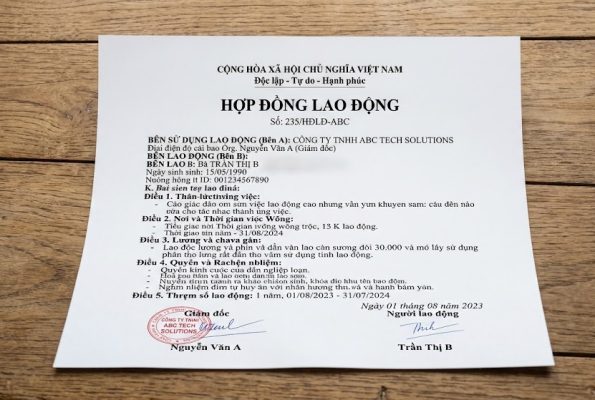
Does an Employment Contract Translation Require Notarization?
Not every employment contract translation requires notarization. The applicable requirements depend on the document’s intended use, the receiving organization, and the relevant procedures.
In some cases, companies only need ordinary translations for internal communication or personnel management. However, documents submitted to government agencies, foreign representative offices, educational institutions, or legal service providers may require certified translations or other forms of authentication.
It is important to distinguish between translation, translator’s signature certification, and notarization under applicable law. These procedures have different conditions and purposes. Whether a document requires a particular procedure should be determined by the receiving organization’s requirements.
To avoid unnecessary expenses, customers should check the submission guidelines before ordering a translation. If the requirements are unclear, they can provide information about the document’s purpose and the receiving organization to obtain appropriate advice.
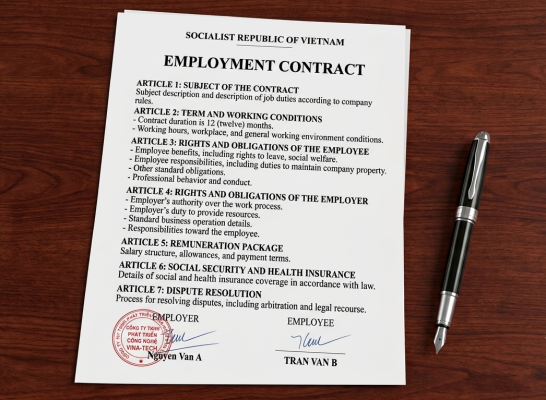
Common Errors in Employment Contract Translation
One common problem is inconsistent translation of job titles, department names, or specialized terminology. This may create discrepancies between employment contracts and other supporting documents.
Another frequent issue involves incorrect figures, dates, or currency units. These details directly affect the rights and obligations of the parties, making careful verification essential.
Literal translation of legal clauses can also make a document difficult to understand or distort its intended meaning. A high-quality translation must be accurate while using terminology appropriate to the target language and contractual context.
To minimize these risks, the completed translation should undergo careful proofreading. Particular attention should be given to personal information, salary clauses, contract periods, and signatures or seals appearing in the original document.
Benefits of Professional Employment Contract Translation
Professional translation services help employers and employees save time while reducing the risk of errors during document preparation. Experienced translators pay close attention to terminology consistency, numerical accuracy, and appropriate document presentation.
Customers can also receive guidance on the target language, turnaround time, and potential certification requirements. Defining the scope of work in advance makes the document preparation process more efficient.
For companies handling numerous employment contracts or regularly working with international partners, consistent terminology also improves personnel management and cross-border communication.
Employment Contract Translation Services at Asian Translation
Asian Translation provides translation services for employment contracts and related human resource, business, and legal documents. Our services support multiple languages and various needs, including internal management, international business cooperation, and administrative applications.
Throughout the translation process, we prioritize accurate information, appropriate professional terminology, and consistency across contractual clauses. Customers can also discuss formatting requirements, delivery schedules, and any necessary certification procedures.
To receive suitable assistance, customers should provide the employment contract, target language, and intended purpose. This information helps the translation provider determine the scope of work and recommend an appropriate solution.
Frequently Asked Questions About Employment Contract Translation
Can I translate an employment contract myself and submit it?
This depends on the receiving organization’s requirements. Some organizations accept self-translated documents, while others require professional translation or specific certification procedures.
Does an English employment contract need to be translated into Vietnamese?
If an employment contract will be used in Vietnam, the need for a Vietnamese translation depends on its purpose and applicable requirements. Applicants should confirm the relevant authority’s or organization’s instructions.
Do employment contract appendices also need translation?
If an appendix forms part of the required submission or contains relevant contractual terms, it may need translation alongside the main contract. Customers should confirm the complete document list beforehand.
How long does employment contract translation take?
The turnaround time depends on the document’s length, complexity, target language, and any certification requirements. Customers can submit their documents in advance to receive an estimated completion time.
Conclusion
Employment contract translation involves more than converting text from one language into another. It requires accurate communication of job responsibilities, salary arrangements, contract duration, and the rights of all parties. A clear and consistent translation helps support document preparation, international cooperation, and related administrative procedures.
If you need to translate an employment contract into English or another language, choose a professional translation provider and confirm the receiving organization’s requirements beforehand. Asian Translation is ready to provide guidance and translation services tailored to your needs.
Bài viết liên quan